
Dentures That
Feel Like Your Own
Dentures are removable or implant-supported replacement teeth for patients missing some or all of their natural teeth. At Dr Mukeshs Dental Solutions in Kothrud, Pune, precision-crafted complete, partial, flexible, and implant-supported dentures are designed for comfort, natural appearance, and restored confidence.
Book Consultation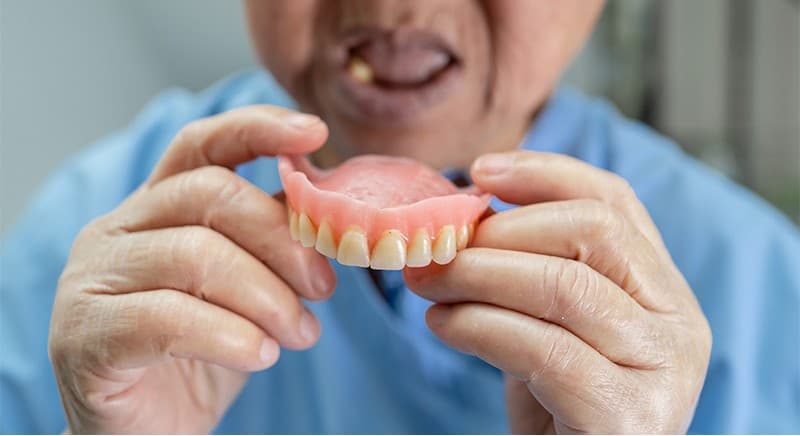
Medically reviewed by Dr. Mukesh P. Chute, MDS · Last reviewed:
Complete Dentures
For patients with no remaining teeth in upper or lower jaw. Full arch restoration with natural-looking teeth on a gum-colored base.
Partial Dentures
When some natural teeth remain. Fills gaps with artificial teeth on a framework that clips to existing teeth.
Flexible Dentures
Made from soft, flexible material — more comfortable and less likely to fracture. Ideal for partial replacement.
Implant-Supported
Dentures anchored by 2–4 dental implants for far greater stability, comfort, and preservation of jawbone.
Getting Dentures, Step by Step
A well-fitting denture takes several short appointments over a few weeks. Each step checks fit and appearance before the next, so the finished denture needs fewer adjustments later.
Examination & Planning
We check your gums, any remaining teeth and the jawbone, and discuss which type of denture suits you. Any teeth that cannot be saved are removed and allowed to heal first.
Impressions & Bite Records
Precise moulds of your mouth and records of how your jaws meet let the lab build a denture shaped to you.
Trial Fitting
You try a wax version to check fit, bite, tooth shade and appearance before the final denture is made, so changes are easy.
Fitting & Adjustment
The finished denture is fitted and fine-tuned. Follow-up visits ease any sore spots as your mouth settles in.
The First Few Weeks
New dentures can feel bulky at first, and you may notice more saliva and a few changed sounds when speaking. This usually settles within a few days to a few weeks as your mouth adapts.
Start with soft food cut into small pieces, and chew slowly on both sides at once to keep the denture stable. Bring back firmer foods gradually.
If a removable denture never feels secure, implant-supported options anchor it in place. See our comparison of implants vs dentures.
Caring for Your Dentures
- Take dentures out and rinse them after meals.
- Clean them daily with a soft brush and a denture cleaner. Regular toothpaste is too abrasive and scratches the surface.
- Never use hot water, which can warp the base.
- Brush your gums, tongue and any remaining teeth every day.
- Do not adjust or repair a denture yourself. Come in for sore spots, cracks or loosening.
- Have a check-up at least once a year, even with no natural teeth left.
Frequently Asked Questions
What types of dentures are available?
Complete dentures for patients with no remaining teeth, partial dentures when some natural teeth remain, flexible dentures made from soft comfortable material, and implant-supported dentures anchored by 2–4 implants for maximum stability.
Are implant-supported dentures better than removable ones?
Implant-supported dentures offer significantly more stability, comfort, and chewing function, and they help preserve jawbone — but the right choice depends on bone volume, budget, and individual needs assessed at consultation.
Will dentures look natural?
Yes. Modern dentures use natural-looking teeth set on a gum-colored base, custom-fitted to your mouth and facial structure for a comfortable, natural appearance.
How long do dentures last?
Most dentures need replacement or a major adjustment every 5–10 years. The gums and jawbone slowly change shape after teeth are lost, so a denture that fitted well can loosen over time and may need relining.
Should I sleep with my dentures in?
Usually not. Taking dentures out at night lets the gums rest and lowers the risk of sore spots and fungal infection. Keep them in water or a soaking solution overnight unless you have been advised otherwise.
Will dentures affect how I speak?
Some words may feel different for the first few days to weeks while your tongue and cheeks adjust. Reading aloud speeds this up. If speech problems persist, the denture can be adjusted.
Can I switch from dentures to implants later?
Yes. Many denture wearers later move to implant-supported dentures for better grip and chewing. A CBCT scan shows whether there is enough bone, and bone grafting can help if there is not.