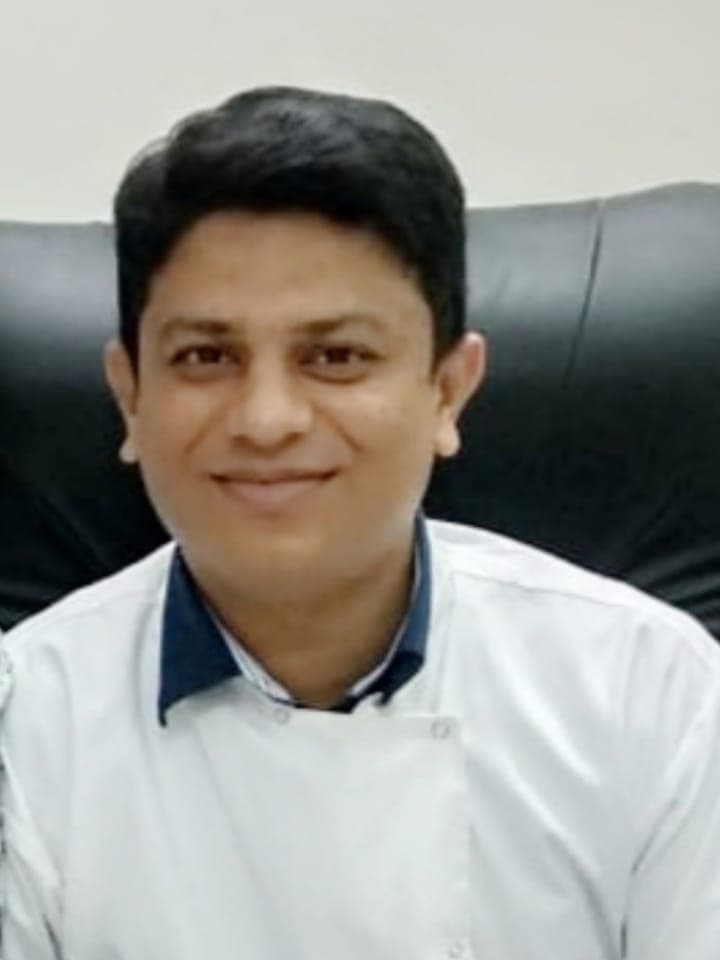
Dr. Mukesh Chute, MDS – Periodontist & Oral Implantologist in Pune
20 years of clinical experience · 5,100+ implant cases treated · 10,000+ patients treated
Advanced dental implants, full mouth rehabilitation and digital implant dentistry at Dr Mukeshs Dental Solutions - Advanced Implant & CBCT Centre, Kothrud.
When replacing missing teeth involves more than placing an implant, diagnosis and treatment planning matter as much as the surgery itself.
Dr. Mukesh Chute is a periodontist and oral implantologist in Pune with 20 yearsof clinical experience in implant dentistry, gum health and comprehensive oral rehabilitation. He combines specialist training with CBCT-based 3D diagnosis, digital treatment planning and modern implant protocols to plan treatment around each patient's anatomy and goals.
About Dr. Mukesh Chute
Dr. Mukesh Chute completed his BDS, followed by an MDS in Periodontics & Oral Implantology from Government Dental College & Hospital, Mumbai.
In 20 years of practice he has treated patients needing everything from a single-tooth replacement to complex implant-supported rehabilitation. His clinical philosophy:
Understand the patient. Diagnose precisely. Plan carefully. Treat predictably.
Every implant treatment begins with an assessment of bone, gums, bite, existing teeth, overall oral condition and long-term goals. The aim is a restoration that is functional, biologically sound, aesthetically appropriate and designed for long-term maintenance, not just a filled gap.
What you can expect
Specialist training
An MDS in Periodontics & Oral Implantology provides postgraduate training in gum treatment, periodontal surgery and dental implantology.
20 years of clinical experience
Dr. Mukesh has managed a wide range of cases, from straightforward single-tooth replacements to full-mouth rehabilitation.
5,100+ implant cases treated
Each case is individually evaluated for bone, soft tissue, bite, aesthetics and restorative needs.
CBCT-based diagnosis
3D CBCT imaging lets implant treatment be planned around your actual anatomy rather than 2D X-rays alone, including:
- Bone volume and anatomy
- Implant position
- Nerves, sinuses and other important structures
- Bone deficiencies
- Existing pathology
- Prosthetic requirements
Digital treatment planning
Where appropriate, CBCT, intraoral scanning, digital smile planning and 3D workflows connect diagnosis, planning, surgery and the final restoration into one coordinated process.
Areas of clinical expertise
Dental implants
Single-tooth implants, multiple implants, implant-supported bridges and dentures, immediate implant placement, immediate loading protocols, and digitally planned implant treatment.
Full mouth rehabilitation
For patients with multiple missing, damaged or heavily restored teeth, treatment may combine implants, crowns, bridges, periodontal therapy and bite correction, planned as one functional system rather than tooth by tooth.
All-on-4 and full-arch implants
For suitable patients with extensive tooth loss, full-arch implant rehabilitation can offer a fixed alternative to removable dentures. Planning covers bone availability, implant positioning, prosthetic design, bite, smile aesthetics and long-term maintenance.
Periodontal and gum care
Healthy gums and supporting bone are fundamental to natural teeth and implants alike. Treatment includes diagnosis and management of gum disease and maintenance of the supporting tissues.
Digital and aesthetic dentistry
Digital workflows support smile design, crowns and bridges, implant restorations, veneers, full-mouth rehabilitation and aligner treatment.
Technology used where it helps the clinical decision
Technology is used when it gives a meaningful clinical advantage, not for show.
- 3D CBCT imaging – three-dimensional information for diagnosis and implant planning.
- Intraoral scanning – digital impressions that improve communication between clinic, patient and lab.
- Digital smile design – shows the likely aesthetic direction before definitive treatment begins.
- 3D printing – digital models and selected printed components for restorative and implant workflows.
- Digital treatment planning – combines examination, CBCT and scans so treatment is planned from both the surgical and restorative side.
How treatment is planned
A missing tooth affects more than the space it leaves: chewing, neighbouring teeth, bite, bone, gum health, facial support and confidence. Treatment starts with understanding the underlying problem.
Consultation – your dental and medical history, concerns and goals are discussed.
Clinical examination – teeth, gums, bite, existing restorations and supporting tissues are assessed.
Digital diagnosis – where indicated, CBCT and digital scans add diagnostic detail.
Treatment planning – options are explained with their benefits, limitations, timeline and maintenance needs.
Treatment – carried out according to your individual plan.
Restoration and maintenance – the final restoration, bite, hygiene and follow-up matter as much as implant placement.
Your plan depends on your anatomy, oral health, functional needs, aesthetic goals and long-term expectations. Some patients need a single implant; others need periodontal treatment, crowns and bridges, or full-mouth rehabilitation.

Qualifications and memberships
Education
- BDS – Bachelor of Dental Surgery
- MDS, Periodontics & Oral Implantology – Government Dental College & Hospital, Mumbai
Professional associations
- Indian Dental Association (IDA)
- Indian Society of Periodontology (ISP)
- Indian Society of Oral Implantologists (ISOI)
- International Team for Implantology (ITI)
Continuing education
Ongoing training in implant dentistry, digital workflows and contemporary treatment protocols.
Is an implant consultation right for you?
A consultation may help if you have:
- One or more missing teeth
- Loose or failing teeth
- Difficulty chewing
- Uncomfortable dentures
- A failing bridge
- Severely damaged teeth or extensive dental problems
- An interest in fixed full-mouth teeth
Not every patient needs implants, and implants are not automatically the right answer for every situation. The right treatment is decided after a proper examination and diagnosis.
You should leave your consultation understanding what is wrong, which options exist, what each involves, the expected benefits and limitations, the approximate timeline, and the long-term maintenance involved.
Frequently asked questions
Is Dr. Mukesh Chute an implant specialist?
Dr. Mukesh Chute holds an MDS in Periodontics & Oral Implantology from Government Dental College & Hospital, Mumbai, and has 20 years of clinical experience in implant dentistry.
How many implant cases has Dr. Mukesh treated?
Dr. Mukesh has treated 5,100+ implant cases over his clinical career.
Does the clinic have CBCT?
Yes. Dr Mukeshs Dental Solutions - Advanced Implant & CBCT Centre has in-house 3D CBCT imaging for diagnosis and implant planning.
Can Dr. Mukesh treat full-mouth dental problems?
Yes. Treatment can combine implants, crowns, bridges, periodontal treatment and other restorative procedures, depending on your needs.
Do all patients need dental implants?
No. Implants are one of several options. The right treatment depends on your clinical condition, preferences and long-term goals.
Where is the clinic located?
The clinic is at Saarrthi Success Square, 210, Karve Rd, nr. Karve putla, above Tanishq showroom, Paschimanagri, Kothrud, Pune, Maharashtra 411038, and serves patients from Kothrud and across Pune.
Book your implant consultation
If you are considering dental implants, full mouth rehabilitation or another complex treatment, start with a comprehensive consultation. Discuss your case with Dr. Mukesh and understand your options before you decide.
Dr Mukeshs Dental Solutions - Advanced Implant & CBCT Centre
Saarrthi Success Square, 210, Karve Rd, nr. Karve putla, above Tanishq showroom, Paschimanagri, Kothrud, Pune, Maharashtra 411038
Phone: +91 74472 86845
Dental implants · Full mouth rehabilitation · All-on-4 · Periodontics · Clear aligners · Cosmetic dentistry
Dr. Mukesh Chute, BDS, MDS – Periodontist & Oral Implantologist
Clinical outcomes vary between patients. Treatment suitability, prognosis and expected results can only be determined after an appropriate clinical examination and diagnosis.